Adding small-cap stocks is a great way to diversify your investment portfolio and give it some additional growth potential. However, small-cap stocks can also add a lot of risk. To limit the risk exposure you have, consider a small-cap ETF instead.
A small-cap ETF is an exchange-traded fund that invests in companies with some of the smallest market capitalizations of any publicly traded company. These market caps tend to be anything up to $2 billion. While that might not sound small, it is compared to mega-cap companies that can have market caps over $1 trillion.
Small-cap ETFs give investors exposure to many different companies instead of a single company. For some investors, this is preferred because these companies have more growth potential than a fund tracking the S&P 500. But the growth opportunity comes with a trade-off. Small-cap ETFs are riskier and can be much more volatile. However, that additional risk can also lead to greater returns.
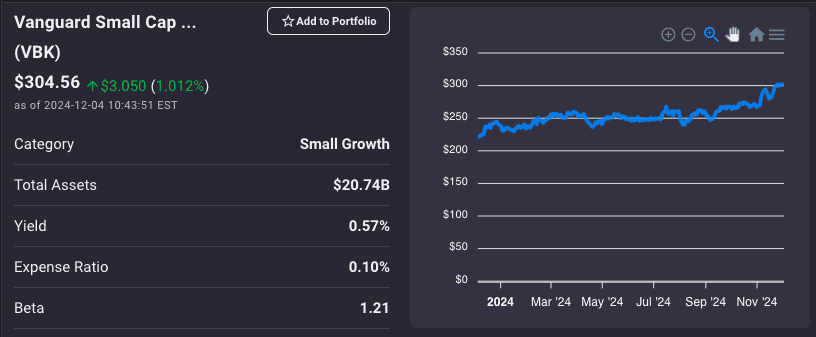
Expense Ratio: 0.07%
1-year Return: 34.95%
3-year Return: -2.75%
5-year Return: 8.23%
Investors looking for high-growth opportunities can consider the Vanguard Small Cap Growth ETF. This fund seeks to track the CRSP US Small Cap Growth Index. A few of the fund’s biggest holdings include:
Also Read: Best EV Stocks to Buy
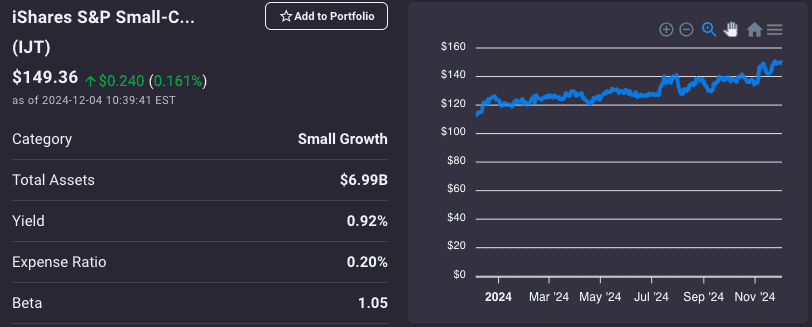
Expense Ratio: 0.18%
1-year Return: 28.41%
3-year Return: 3.42%
5-Year Return: 10.40%
The iShares S&P Small-Cap 600 Growth ETF is designed to give investors exposure to companies expected to grow faster than the market average. It’s heavily weighted with industrial, consumer discretionary, and information technology companies. Some of its largest holdings include:
Also Read: Best Gold Stocks to Buy
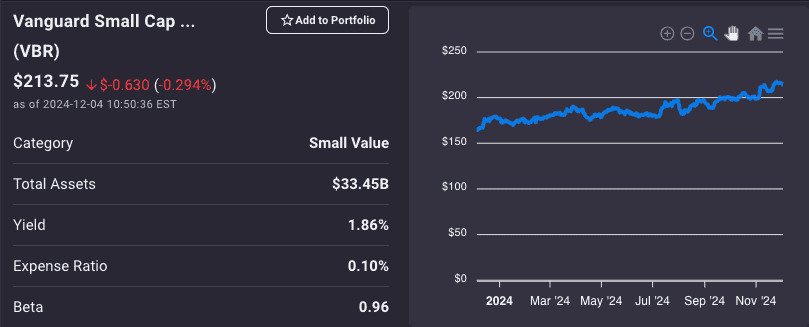
Expense Ratio: 0.07%
1-year Return: 33.81%
3-year Return: 6.26%
5-year Return: 10.98%
If growth isn’t your main objective and instead, you want to find smaller companies that have low valuations, you might want to consider the Vanguard Small Cap Value ETF. This fund seeks to track the CRSP US Small Cap Value Index. A few of the fund’s largest holdings include:
Also Read: How to Calculate Dividend Payout
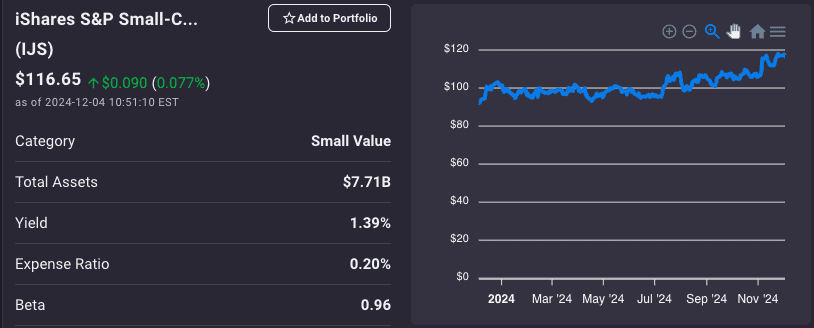
Expense Ratio: 0.18%
1-year Return: 22.61%
3-year Return: 3.95%
5-year Return: 9.21%
Similar to the Vanguard Small Cap Value ETF, the main objective of the iShares S&P Small-Cap 600 Value ETF is to find companies that tend to be undervalued compared to similar companies. Some of the biggest holdings of this small-cap ETF include:
Pro Tip: Ready to buy any of these ETFs? Here are six apps that will give you free stocks when you sign up.
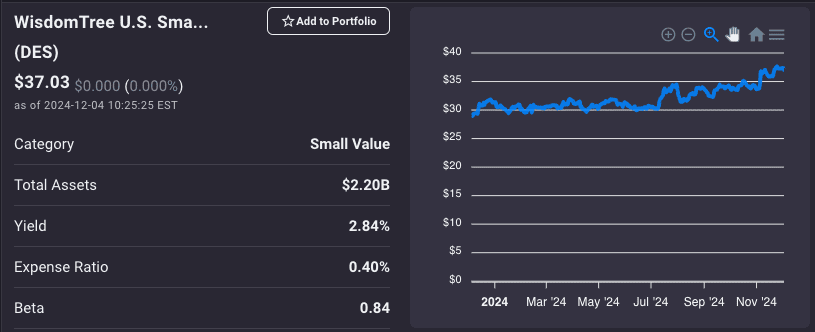
Expense Ratio: 0.38%
1-year Return: 30.06%
3-year Return: 5.13%
5-year Return: 7.15%
Dividend Yield: 3.07%
The WisdomTree U.S. SmallCap Dividend Fund is used by investors who are looking for growth opportunities but also want an income component from dividends. Some of the largest holdings include:
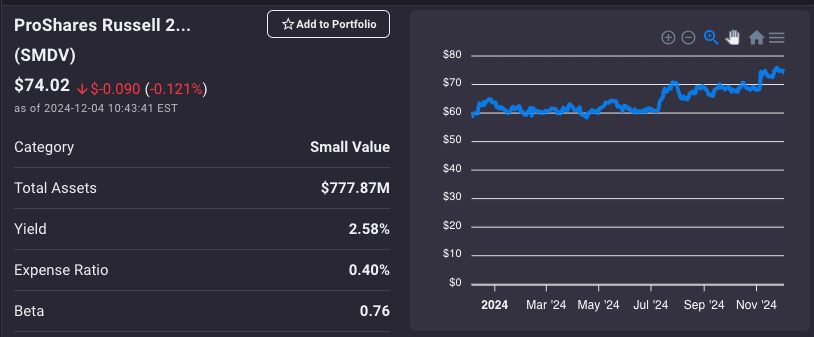
Expense Ratio: 0.40%
1-year Return: 29.42%
3-year Return: 4.82%
5-year Return: 4.85%
Dividend Yield: 2.99%
The ProShares Russell 2000 Div Growers ETF not only focuses on companies that pay dividends but also on companies that have increased their dividend yield in each of the past 10 years. These companies all have steady earnings and good fundamentals. A few of the fund’s largest holdings include:
Small-cap ETFs can be a great investment to add to a larger portfolio. However, there are advantages and disadvantages that you need to consider.
Higher Risk: Small cap companies have a higher risk for failure. However, because many of these small cap ETFs have 500 or more companies included, the impact would be small.