Invest for Returns. Invest with Purpose.

All investing has impact. Understand what your money supports. Upgrade your portfolio for strong returns and values-aligned investing.
Get Insights
No credit card required
Investor looking at impact investing opportunities
Illustration of positive impact investing

Invest for Returns. Invest with Purpose.

All investing has impact. Understand what your money supports. Upgrade your portfolio for strong returns and values-aligned investing.

No credit card required

The Strongest Source of Alpha

Own Your Best Portfolio. Built for Performance and Impact

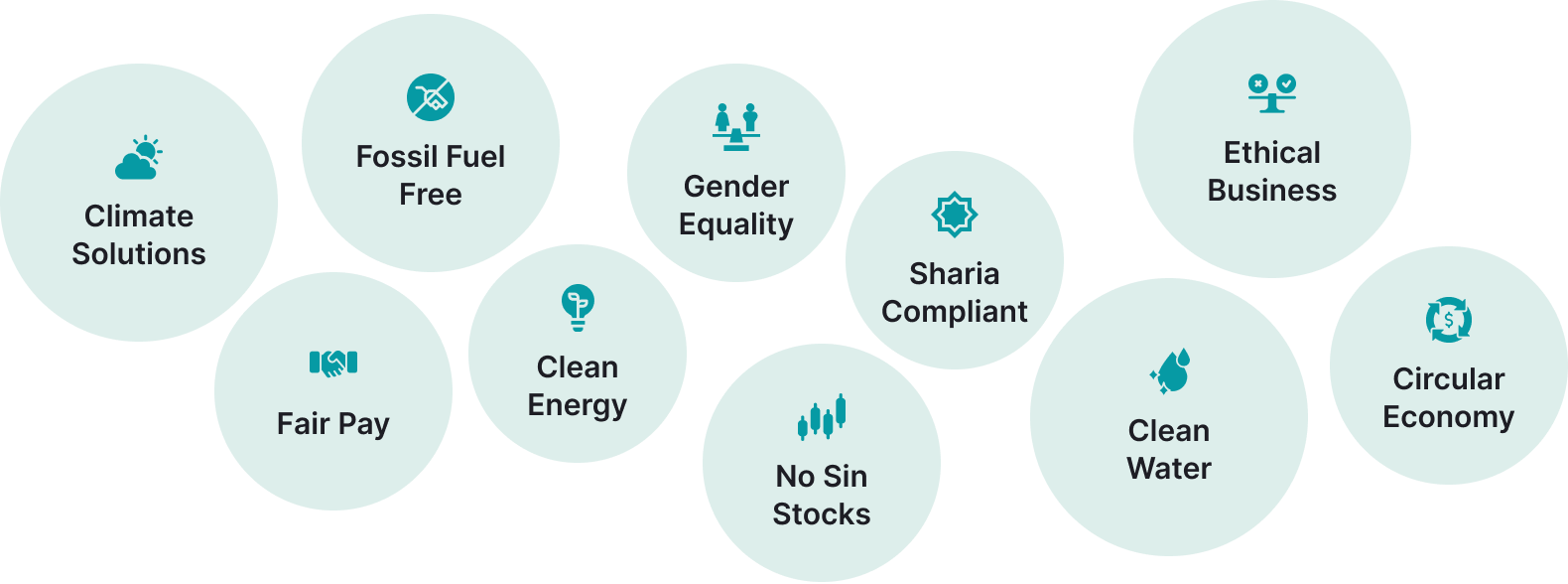
Ziggma's unique portfolio insights keep you on track toward your financial goals while making sure your money reflects what you believe in. Whether you want to fight climate change, support fair labor, reduce plastic waste, or avoid companies that profit from harm, Ziggma helps you build a portfolio you can stand behind.
Get Impact Insights

A New Generation of Investors Want Performance and Purpose

Morgan Stanley's Sustainable Signals survey finds that 88% of all investors would like to consider impact when making investment decisions, but currently find it difficult to do so. Not anymore. Welcome to the future of investing.

Join the Movement

Impact Investing Delivers Alpha—Not Trade-Offs

According to Schroders and Oxford Saïd Business School, companies tackling real-world challenges deliver stronger, more resilient returns. In their study, impact-driven equity portfolios outperformed the market by up to 9% - and with less volatility.

View Opportunities

Big Problems Make For Even Bigger Opportunities

The world's toughest challenges, from climate change to plastic waste and inequality, are sparking a wave of innovation. The brightest minds are building solutions that reshape industries and unlock massive value. Ziggma helps you discover and invest in the companies driving that change.


Start Exploring

Zero Greenwashing. 
100% Transparency.

At Ziggma, we believe impact investing should be based on facts, not marketing. To get accurate and comprehensive impact data, we partner with ACA Ethos, a leader in high-quality ESG and impact intelligence.
Get Started FREE
ACA Ethos' data and methodology is fully traceable. Data is sourced with clear, transparent criteria, eliminating the ambiguity and selective reporting that typically enable greenwashing.

FAQ

What is impact investing?

Impact investing is an approach that pursues financial returns and measurable real-world impact at the same time. It goes beyond traditional investing by asking not just what will this earn? but also what will this fund? Crucially, impact investing is not philanthropy. The goal is competitive — often market-beating — returns, paired with capital flowing toward solutions to real problems: clean energy, healthcare access, sustainable agriculture, and the circular economy. A growing body of evidence shows that the two objectives reinforce each other rather than compete.

How is impact investing different from ESG?

Both target financial returns, but they evaluate companies through different lenses. ESG measures how environmental, social, and governance factors affect the company — will climate risk hurt earnings, will labor disputes disrupt operations. This is single materiality, focused on risks to shareholder value. Impact investing applies double materiality, measuring both how ESG factors affect the company and how the company affects the world. An illustrative example: a manufacturer in an arid region secures water through a long-term utility contract, leaving a nearby town short. From an ESG lens, the company managed its water risk well and scores highly. From an impact lens, it scores poorly because its solution harmed the surrounding community. The practical consequence is that ESG funds may still hold fossil-fuel producers if those companies manage their own risks well, while an impact-aligned portfolio typically will not. Read the full comparison →

Is impact investing profitable?

Yes, and the evidence keeps strengthening. The aim of impact investing is to deliver returns at or above market benchmarks, not to subsidize good intentions. A landmark study by Schroders and the Oxford Saïd Business School found that impact-driven equity portfolios outperformed the market by up to 9% — with lower volatility. Specific success stories span industries: First Solar in renewables, Tesla in electrification, Stride in education, and the circular-economy disruptors that became Uber and Airbnb. Venture investor Chris Sacca has predicted that the next trillion-dollar company will be a climate company. See the deep dive on impact outperformance →

Why do impact stocks tend to perform well?

Three structural reasons. First, large addressable markets — the world's biggest problems are also its biggest markets, and companies solving them often have decades of runway. Second, regulatory tailwinds — policy increasingly favors solutions over polluters, shifting capital flows in impact companies' favor. Third, quality alignment — many impact leaders also score highly on fundamentals: strong margins, durable competitive moats, and disciplined balance sheets. They tend to be quality companies first and impact companies second, which is why a quality screen applied to the impact universe so often surfaces top performers.

What are examples of impact investments?

Impact investments span every major asset class — stocks, ETFs, mutual funds, bonds, private equity, and even real estate. On the public equity side, common themes include clean energy (see top renewable picks), broader climate solutions (see top climate picks), the circular economy, healthcare access, education and inclusion, and water and biodiversity. You can also build impact through exclusion — for example, a fossil-free portfolio that screens out oil, gas, and coal producers.

How does Ziggma measure impact?

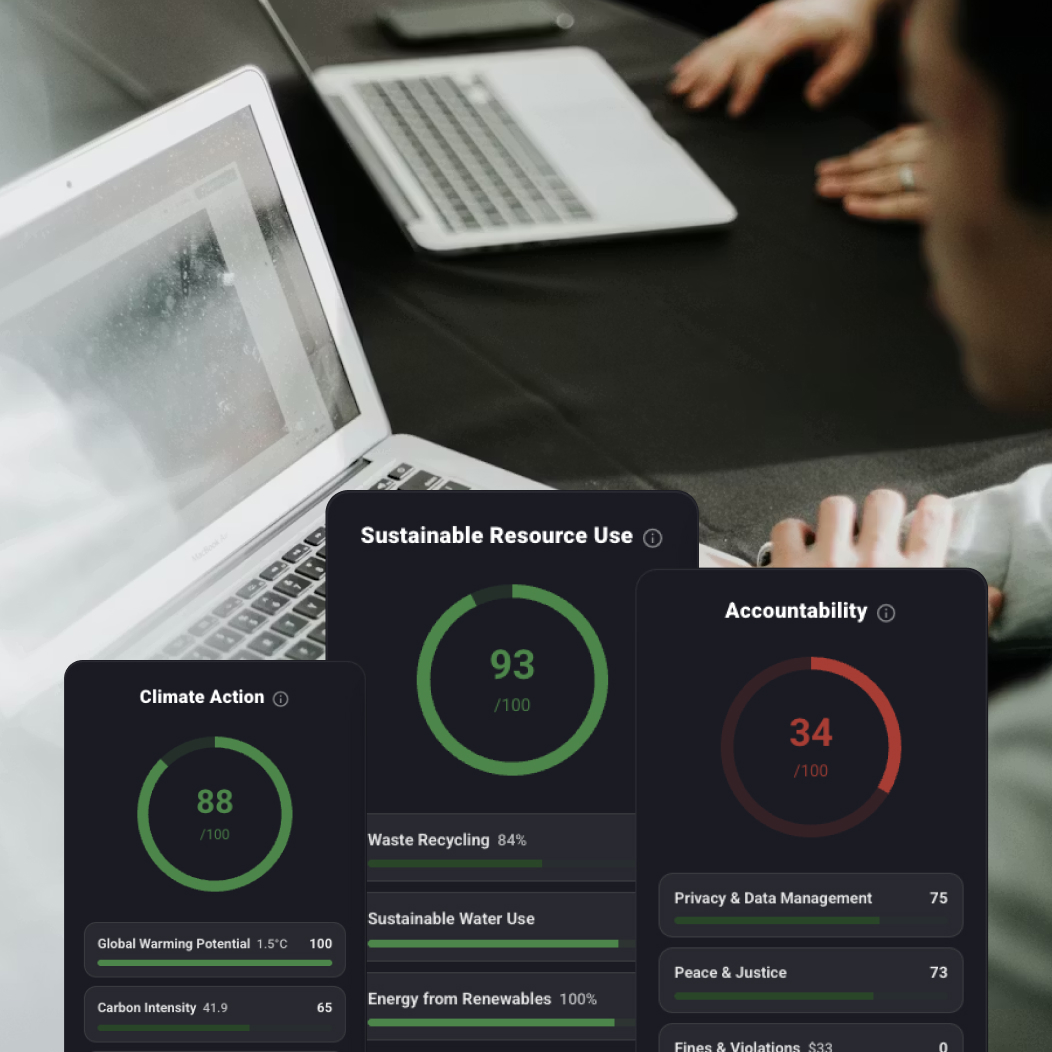
Ziggma partners with ACA Ethos, a leader in ESG and impact intelligence, to source institutional-grade impact data on thousands of companies. The methodology is fully traceable and transparent — every data point ties back to clear, disclosed criteria, eliminating the ambiguity and selective reporting that typically enables greenwashing. For each holding in your portfolio, Ziggma surfaces how it scores on the themes you care about: climate, fossil-fuel exposure, labor practices, weapons involvement, animal welfare, and more.

How does Ziggma avoid greenwashing?

By relying on facts rather than marketing. Impact ratings come from ACA Ethos, not from the companies themselves. Every score is backed by disclosed criteria you can examine. And the framework uses double materiality, so companies are not credited just for managing their own risks well — outward impact on the planet and society is measured directly. This is why an oil major with a polished sustainability report does not sneak through Ziggma's impact lens the way it might through a conventional ESG screen.

Can I see the real impact of my current portfolio?

Yes — and most investors are surprised by what they find. Once you link your brokerage or upload a portfolio, Ziggma's Impact X-Ray analyzes every holding and flags exposure across fossil fuels, carbon intensity, controversial weapons, labor and human-rights issues, and positive contribution to the UN Sustainable Development Goals. Many "ESG" funds quietly hold fossil-fuel producers, and broad index funds almost always do. The X-Ray makes that visible in seconds.

What is the Ziggma Stock Score, and how does it relate to impact?

The Ziggma Stock Score is a proprietary 0–100 rating of a company's fundamental strength, combining growth, profitability, valuation, and financial health. It is intentionally separate from impact scoring. Pairing the two lets you filter for companies that are both fundamentally strong and impact-aligned — and that intersection of quality and purpose is where the most durable opportunities tend to live.

Do I have to sacrifice diversification?

No. The impact universe spans technology, healthcare, industrials, real estate, consumer, and utilities. You can build a fully diversified portfolio without holding a single fossil-fuel producer or controversial-weapons manufacturer. The discipline is not finding enough impact-aligned names — it is making sure the ones you pick also clear a fundamental quality bar.

Is impact investing only for wealthy investors?

No. You can start with any portfolio size. Publicly traded stocks, ETFs, and mutual funds make impact investing accessible to anyone with a brokerage account, and many of the most powerful impact themes — clean energy, healthcare access, sustainable consumer brands — are available through liquid, low-fee instruments.

How do I start impact investing with Ziggma?

Three steps. Create a free account — no credit card required. Link a brokerage or upload a portfolio (Ziggma securely connects to over 10,000 brokers, including Fidelity, Schwab, Robinhood, and Vanguard). Then run your Impact X-Ray to see exactly where your money is currently going, and where it could go instead. From there, you can use the Portfolio Optimizer to fine-tune holdings for stronger returns and better impact alignment. Get started free →