TJX Companies’s (TJX: 🔎) success is squarely built on solving one of the fashion industry’s biggest problems: fashion waste.
The scale of that problem is hard to ignore. Estimates suggest that up to 30% of all clothing produced globally is never sold. Much of it ends up destroyed, or simply discarded in landfills.
TJX addresses this inefficiency. By buying excess inventory and redistributing it through its off-price model, the company turns waste into value. Over time, that has translated into steady growth, strong profitability, and durable shareholder returns.
TJX is a strong GoodStocks case. It’s a high-quality compounder capable of delivering low double-digit returns over time.

Source: Ziggma
TJX combines steady revenue growth with strong profitability and disciplined execution. Over time, that supports robust double-digit annual returns.
With a meaningful share of global clothing going unsold, TJX plays a role in reducing waste by redistributing excess inventory. It improves resource efficiency without requiring additional production.

TJX operates some of the most recognizable off-price retail chains in the world, including T.J. Maxx, Marshalls, and HomeGoods.
What sets the company apart is how it buys. Traditional retailers commit to inventory months in advance, often guessing what consumers will want. TJX takes the opposite approach. It buys opportunistically, sourcing high-quality goods when brands are left with excess inventory.
This flexibility creates a powerful advantage. Suppliers gain an efficient outlet for unsold goods, while TJX acquires branded merchandise at attractive prices. Consumers, in turn, benefit from meaningful discounts.
The result is a business model that does not just tolerate inefficiency. It thrives on it.
There is another dynamic worth noting. Premium fashion has been performing well in the United States. Brands like Ralph Lauren and Coach have shown that consumers are still willing to pay for quality and brand identity.
This strength at the top of the market feeds directly into TJX’s ecosystem. When premium brands overproduce or adjust collections, excess inventory needs to go somewhere. Increasingly, that somewhere is the off-price channel.
That creates a steady flow of desirable merchandise for TJX, reinforcing its value proposition and supporting traffic in its stores.
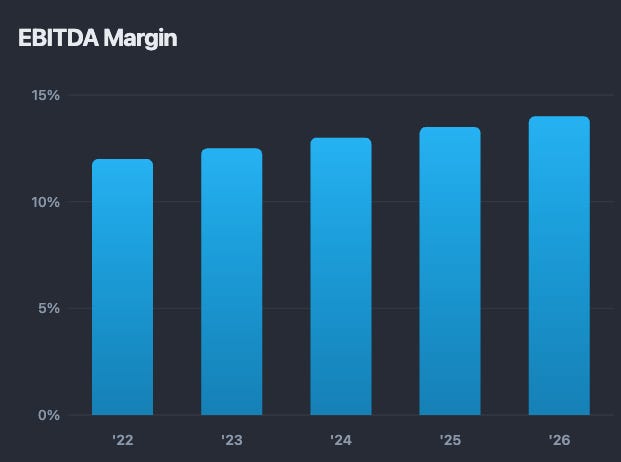
TJX is currently experiencing a “Goldilocks” environment where persistent market share gains from value-conscious shoppers and a rebound in the HomeGoods segment are driving robust top-line momentum.
Profit spiked in Q4 2026 by 28%, admittedly amplified by a one-time litigation settlement, though underlying adjusted earnings still showed impressive double-digit acceleration.
This growth is further supported by structural margin improvements, including lower freight costs and better-than-expected control over inventory “shrink” or retail theft.
Ultimately, the company’s ability to leverage its massive scale for better inventory pricing, combined with aggressive share buybacks, has allowed profit growth to consistently outpace sales.
Source: Ziggma
The strength of TJX comes from its position between two powerful forces.
On one side are consumers looking for value. On the other are brands dealing with excess inventory. TJX connects the two.
This dual exposure creates resilience. When consumers trade down, demand strengthens. When brands misjudge demand, supply increases.
Layered on top is the in-store “treasure hunt” experience, which continues to drive foot traffic and repeat visits in a way that is difficult to replicate online.
At roughly 30.7x forward earnings, TJX trades above its historical average. That reflects the quality and predictability of the business on the one hand. And accelerating earnings driven by powerful tailwinds and massive stock repurchases on the other.
Rather than relying on valuation expansion, the return profile is driven by something more substantial. Steady earnings growth, combined with disciplined execution, supports a path toward double-digit annual returns.
For investors, the implication is straightforward. Build positions gradually, especially during pullbacks, and allow compounding to do the work.
TJX’s Ziggma Score of 94 captures the strength of the business. Growth, profitability, and financial health all score highly.
Like any retailer, TJX is exposed to shifts in consumer spending. A sharp downturn could weigh on discretionary demand. The model also depends on continued excess inventory from suppliers. Finally, a premium valuation leaves less margin for error if growth slows.
TJX is not about chasing short-term gains. It is about owning a resilient business that compounds steadily over time
Fashion remains one of the most wasteful industries globally. Large volumes of clothing are produced each year with no guarantee of sale. A significant portion never reaches consumers in a meaningful way.
TJX plays a quiet but important role in addressing this imbalance. By redistributing excess inventory, the company extends product life cycles and reduces the likelihood that goods are destroyed or discarded. It improves the efficiency of the system without increasing production.
Beyond its core model, TJX is also making progress in its own operations.
The company reports a waste recycling rate of roughly 81%, alongside steady improvements in resource use and emissions reduction. Its climate action score of 71 reflects meaningful progress, even if it is not leading the sector.
The direction is clear. TJX is working toward lower emissions and more efficient operations while maintaining its core business advantages.
TJX highlights an important idea that is often overlooked. Not all impact comes from innovation or new technologies. Sometimes it comes from making existing systems work better
TJX does not rely on disruption or rapid change. Its strength lies in discipline, consistency, and a business model that turns inefficiency into opportunity. That combination has delivered reliable returns over time, and there is little to suggest that will change.
At the same time, the company contributes to a more efficient fashion ecosystem by reducing waste and extending product lifecycles. For investors, TJX offers a rare combination: steady compounding supported by a business model that makes the system work better.
Disclaimer
This information is provided solely for general information and educational use. It is not intended as, and should not be construed to be, financial, investment, tax, legal, or other professional advice. Data used in the analysis is derived from third-party sources and applicable at the time of publication of the analysis. No representation or warranty is made as to the accuracy or completeness of the information or any analysis herein.
Ziggma is not registered or licensed as a financial advisor, broker-dealer, or tax professional. Readers should perform their own independent research and seek advice from appropriately qualified professionals before making any financial, investment, or legal decisions.
You should presume that, as of the date this report is published or any related communication referencing publicly traded securities or assets, Ziggma team members may hold positions in the securities or assets discussed and could benefit financially from price movements. Positions may be changed without notice.
There is no duty to revise or update the content after publication. Neither Ziggma nor any affiliated parties accept responsibility for market changes, economic developments, or subsequent events that could affect the relevance or accuracy of the information.
Forward-Looking Statements
This report may include forward-looking statements, such as forecasts, projections, estimates, or expectations regarding financial outcomes, market dynamics, or future corporate developments. These statements are based on assumptions that may not hold true, and actual results may vary materially. The author undertakes no obligation to update or revise any forward-looking statements as circumstances change.
Third-Party Data & External Sources
Certain information is sourced from third parties. Nonetheless, the accuracy, completeness, and timeliness of such information cannot be assured. Ziggma disclaims any responsibility for errors or omissions in third-party data and does not endorse, verify, or assume accountability for the methodologies or conclusions of external sources.
AI-Generated Enhancements
AI tools can be used to enhance clarity, structure, and brevity, and to assist with research organization, ideation, and analytical review.
Redistribution
You may share this report for informational purposes. However, reproduction, distribution, republication, or modification of any portion of the content, in whole or in part, without prior written consent is prohibited.
Investment Risk Disclosure
All investing carries risk of loss.. Historical performance does not guarantee future outcomes. References to specific securities, companies, or strategies are for informational purposes only and do not constitute recommendations or endorsements. Any use of, or reliance on, the information in this report is entirely at the reader’s own risk.
Neither Ziggma nor affiliated parties shall be liable for any direct or indirect losses or damages of any kind arising from the use of this report or reliance on its contents. By accessing this report, you agree to indemnify and hold harmless Ziggma and affiliated parties from any claims, liabilities, or damages resulting from your use of the material.
You alone bear responsibility for your decisions. Use this information at your own discretion and risk.