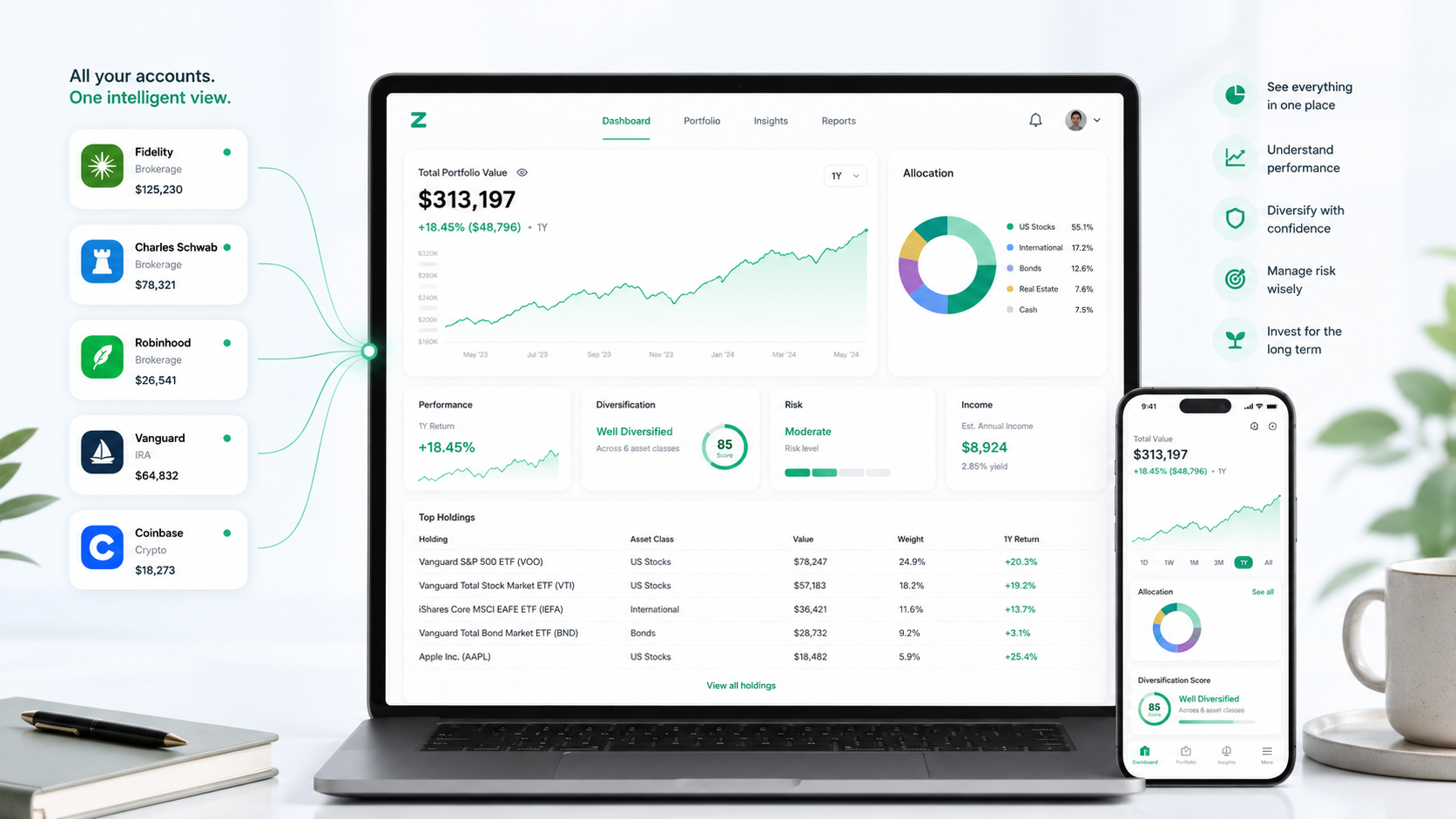
Brokers are built to execute trades, not to analyze portfolios. A portfolio tracker is purpose-built for the second job, pulling holdings from one or several accounts into a single view and connecting performance, diversification, risk, and income into one continuous picture, something a brokerage dashboard isn't designed to do.
Independence is the second advantage. A broker has an interest in the products and services it offers; a portfolio tracker doesn't. Its analysis isn't shaped by what the provider sells, which makes the read on a portfolio more objective.
The third advantage is design. Brokerage platforms are often built around order entry and account management, with portfolio analysis added as a secondary feature. Portfolio trackers are built around analysis from the start, which tends to produce a clearer, more modern interface for understanding a portfolio at a glance.
Together, these three traits, specialization, independence, and design, are why a free portfolio tracker is worth using even for investors who hold everything at a single broker. The advantage compounds for investors who hold accounts at more than one broker, since a tracker is often the only place those accounts are ever viewed together.
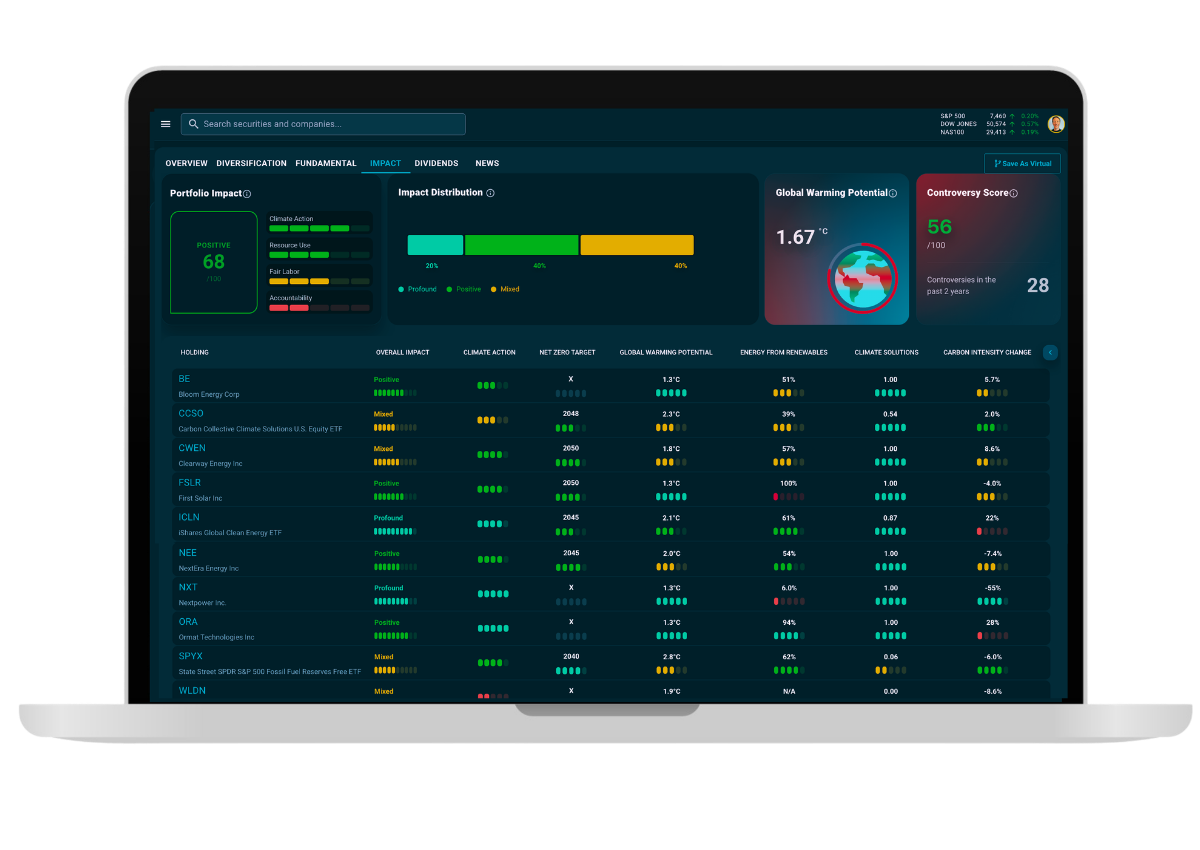
Ziggma, Empower, and Stock Rover all offer free portfolio tracking, but each is built around a different core feature. Ziggma connects performance, diversification, risk, income, and Impact Score in one dashboard. Empower focuses on net worth tracking across linked accounts. Stock Rover focuses on stock-level fundamental data and screening.
Ziggma is the best free portfolio tracker for investors who want more than a list of holdings. It's free to start, and it connects performance, diversification, risk, income, and impact into a single view rather than treating each as a separate report.
Ziggma's Portfolio Checkup analyzes a portfolio's holdings and returns four scores in one view: a Diversification read using the Herfindahl-Hirschman Index (HHI), a Ziggma Score for overall portfolio quality, an Impact Score for climate and values-alignment, and a Risk score based on portfolio beta.
.png)
In the example above, the portfolio scores 83 on quality but shows an HHI of 0.305, signaling high concentration, and a beta of 1.38, meaning it's more volatile than the broader market. These scores aren't independent. A concentrated portfolio (high HHI) often produces the elevated beta seen here, since a small number of holdings are driving both the risk and the outcome. Empower and Stock Rover don't generate this kind of connected, score-based view in their free tiers.
For investors comparing tools beyond these three, Ziggma's portfolio analysis tools guide covers a wider set of platforms.