In this update
Autodesk (ADSK) grew third-quarter sales 17%, beat forecasts and raised its full-year outlook again. Two of the three reasons for owning it in our first report on 1 Nov 2025 got stronger: profit margins and cash flow. The third, fast growth, held up. The stock fell 3.5% anyway, and investors now pay less for Autodesk's profit than at any point since at least 2022.
Software doesn't look like a business that helps the planet, yet Autodesk is a sustainability leader on two counts. Buildings use about 40% of the world's energy, by Autodesk's count, and every Revit customer gets Forma Carbon Insights at no extra cost. It measures a design's carbon, from its materials and from its future energy use, before anyone pours concrete. Arcadis, a global engineering consultancy, made Forma a standard tool for its sustainability work. Autodesk itself runs on 100% renewable electricity, and if every company emitted like it, warming would stop at 1.5°C, the Paris agreement's goal. That earns an Impact Score of 92 out of 100, in the top Profound band, and Ziggma tracks it with every update.
30.3x
Five-year average: 67.6x
$320
+30% upside (Wall Street consensus)
94
+27 from 67 in our first report
92
Profound band
Best, base, downside case
Each case multiplies the $10.33 analysts expect in official profit per share for the year to January 2028 by a price to earnings multiple: 40x for the best case, today's 30.3x for the base case and 21.2x for the downside case. See what each case assumes
Estimates, not promises. The price can end up outside this range, including below the downside case, and you can lose money. This is research, not personal financial advice.
Data as of 25 Nov 2026 close; scores as of 26 Nov 2026
Revenue for the three months to 31 Oct rose 17% to $2.16B, ahead of the $2.13B analysts expected. Adjusted earnings per share, profit per share before one-off items such as acquisition costs, rose 20% to $3.20, against a $3.07 forecast. Official earnings per share, the figure under standard accounting rules, rose 68% to $2.68, helped by a one-off tax benefit worth about $0.50 a share.
Quarter to 31 Oct, this year against last
Analysts expected $2.13B
Analysts expected $3.07
Includes a one-off tax benefit of about $0.50
The biggest business, software for architecture, engineering and construction, grew 19% to $1.10B. Free cash flow, the cash left after running the business, rose 17% to $505M, according to the earnings release. Billings, what Autodesk invoiced customers, grew a slower 12%.
Autodesk now expects $8.36–8.375B in sales for the year to January 2027, up from $8.10–8.17B in February. That includes MaintainX, a maintenance software maker it bought this year.
What Autodesk expects next
Quarter to 31 Jan 2027
Year to 31 Jan 2027
Year to 31 Jan 2027
Our first report on 1 Nov 2025 made three arguments. Here's how each fared:
The business did what we expected, except for billings.

The Ziggma Stock Score is 94 out of 100. Each pillar ranks Autodesk against its peers:
A score this high with a falling price says the market is pricing a risk the numbers don't show yet, mainly that AI tools could undercut design software. The price to earnings ratio, what investors pay for each $1 of yearly profit, is 30.3x official earnings, against a five-year average of 67.6x. On cash, it looks cheaper still: Autodesk's $51.33B market value is about 19x the $2.73–2.75B of free cash flow it expects this year.
Official profit swings with one-off items, so we also checked sales. Price to sales, the share price against yearly revenue per share, isn't moved by tax benefits. It tells the same story: 6.3x trailing sales, against a five-year average of 10.0x and about 14.6x at the start of 2022.
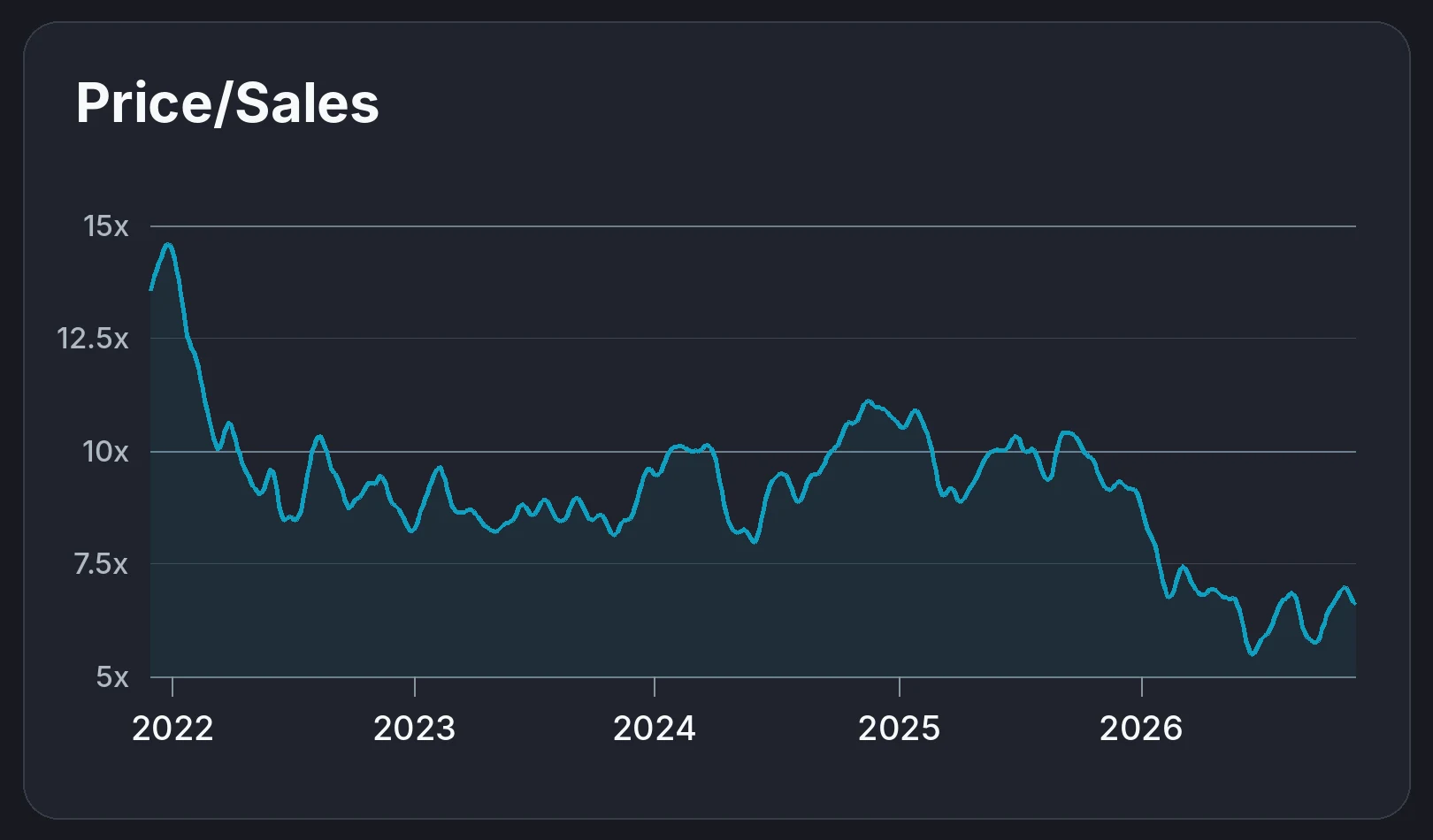
The fear is simple. Autodesk charges mostly per user. If AI agents can produce drawings that used to take people days, firms may need fewer people and fewer subscriptions. That worry hit the stock in September, when Piper Sandler cut its price target on AI concerns.
The results don't show it yet. Autodesk said renewal rates rose and new business grew this quarter, and its biggest business grew 19%. In September, UBS said its own research found no evidence that AI is replacing core design software.
Autodesk's answer is to sit underneath the AI instead of racing it. It's opening its software to outside AI agents through MCP, a standard way for agents to plug into other programs, and building its own Autodesk Assistant. In one test, a global engineering consultancy cut the time to produce drawings in Revit by more than 90%, and still expects to save at least 50% after review and checks. The chief financial officer said future sales will come "from both seats and usage." Autodesk hasn't started charging for work done by outside agents yet.
We think the bet is sound. An AI agent can draft a floor plan, but a hospital still needs a building model that engineers, contractors and inspectors trust, and for Autodesk's customers that model lives in Revit. Agents need that data to do anything useful, and Autodesk controls the door. Cheaper drawings also let firms bid on more projects with the same staff, the point the chief executive made about the 90% test. The risk is timing. Seats could shrink before usage revenue shows up, and that gap would hit billings first. That's why billings is the number we'll watch every quarter.
All three value Autodesk on its official profit, the figure under standard accounting rules and the same basis as its price history in the Ziggma app. Analysts expect $10.33 a share for the year to January 2028, the middle of a $9.73–10.93 range. The cases differ in how much investors pay for each $1 of that profit, the price to earnings ratio. We don't use the five-year average of 67.6x: it reflects years when official profit was much lower, and it would put the stock near $700.
Downside case
$219 −11%
Investors cut what they pay to 21.2x, a 30% markdown from today's 30.3x, because they fear AI tools will undercut design software.
Base case
$313 +27%
Investors keep paying today's 30.3x, and the price rises with profit.
Best case
$413 +67%
Investors pay 40x, still below 48.4x, the lowest year-end multiple since 2022.
Autodesk pays no dividend. It returns cash through buybacks instead: $1.25B in the first nine months of this fiscal year. Wall Street's view, not ours: the average analyst target is $320 (+30%), about 31x expected profit.
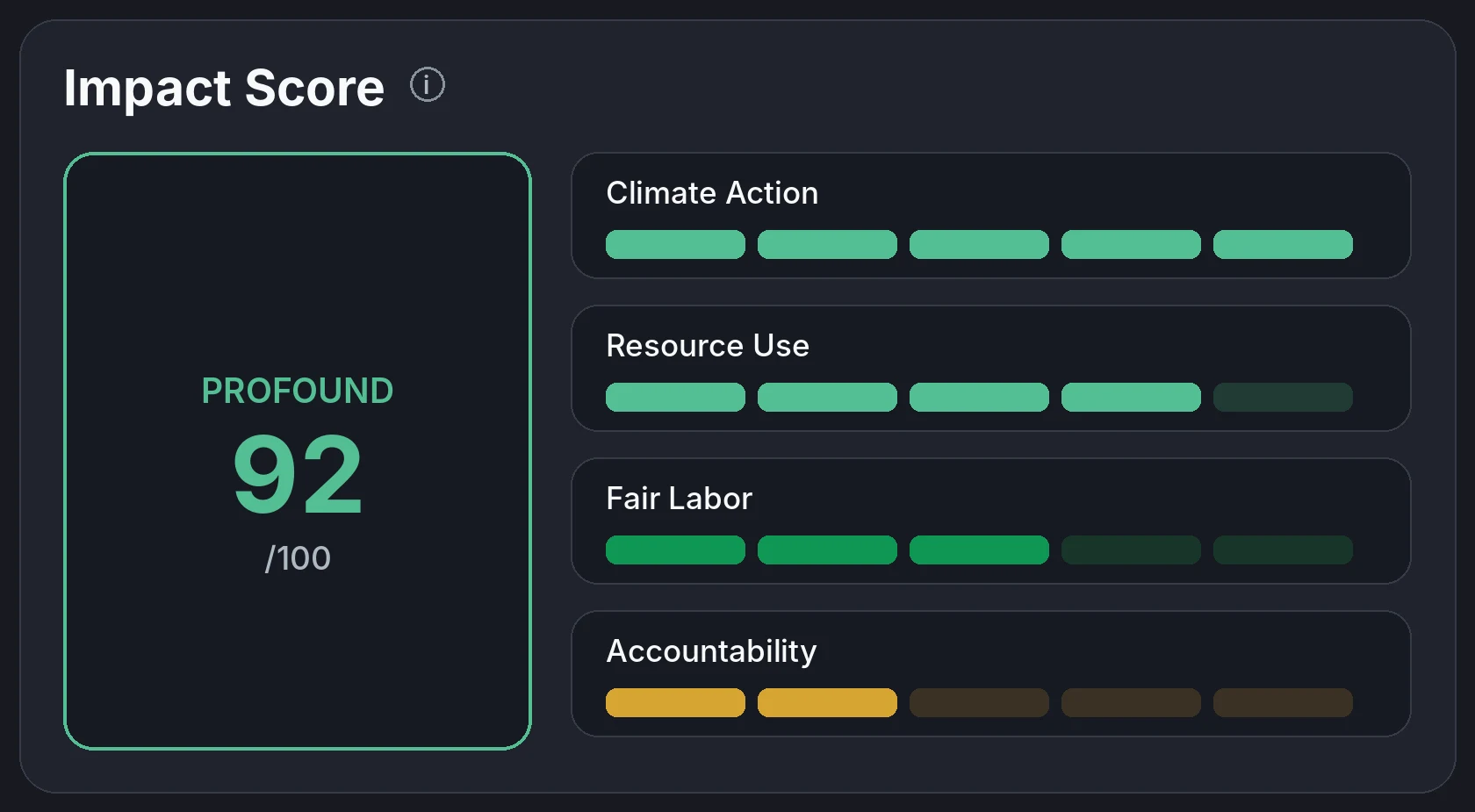
Picture an architecture team choosing between concrete and timber for a new school. With Autodesk's carbon tools, the climate cost of each option sits next to its price while the design is still on screen, before a single truck rolls. That's where Autodesk's Impact Score of 92 comes from. Climate Action scores 93 and Resource Use 87, and the company does what it sells: on top of renewable power, it recycles 64% of its waste.
Inside the company, the picture is less tidy. Staff rate Autodesk 4.1 out of 5, so people like working there, but the CEO earns 175 times what the median employee does, and that holds Fair Labor to 65. Accountability is the weakest pillar at 43, with a middling score for peace and justice, even though Autodesk paid no fines.
The products carry the score. Pay and governance are where it can still improve.
Thesis stronger, particularly after the pullback. The business got better and the stock got cheaper. Watch billings: if growth slips below 12%, the market's AI worry gains weight.
Data as of 25 Nov 2026 close. Scores and valuation from Ziggma, 26 Nov 2026.
See the Ziggma Stock Score and Impact Score for every stock you own, and how your portfolio's warming potential compares with the S&P 500.
Create a free accountOr find more stocks like Autodesk in the impact stock screenerNew to screening by impact? Our positive screening guide shows how to find companies by what they do well.