Last Updated: 24 October 2026
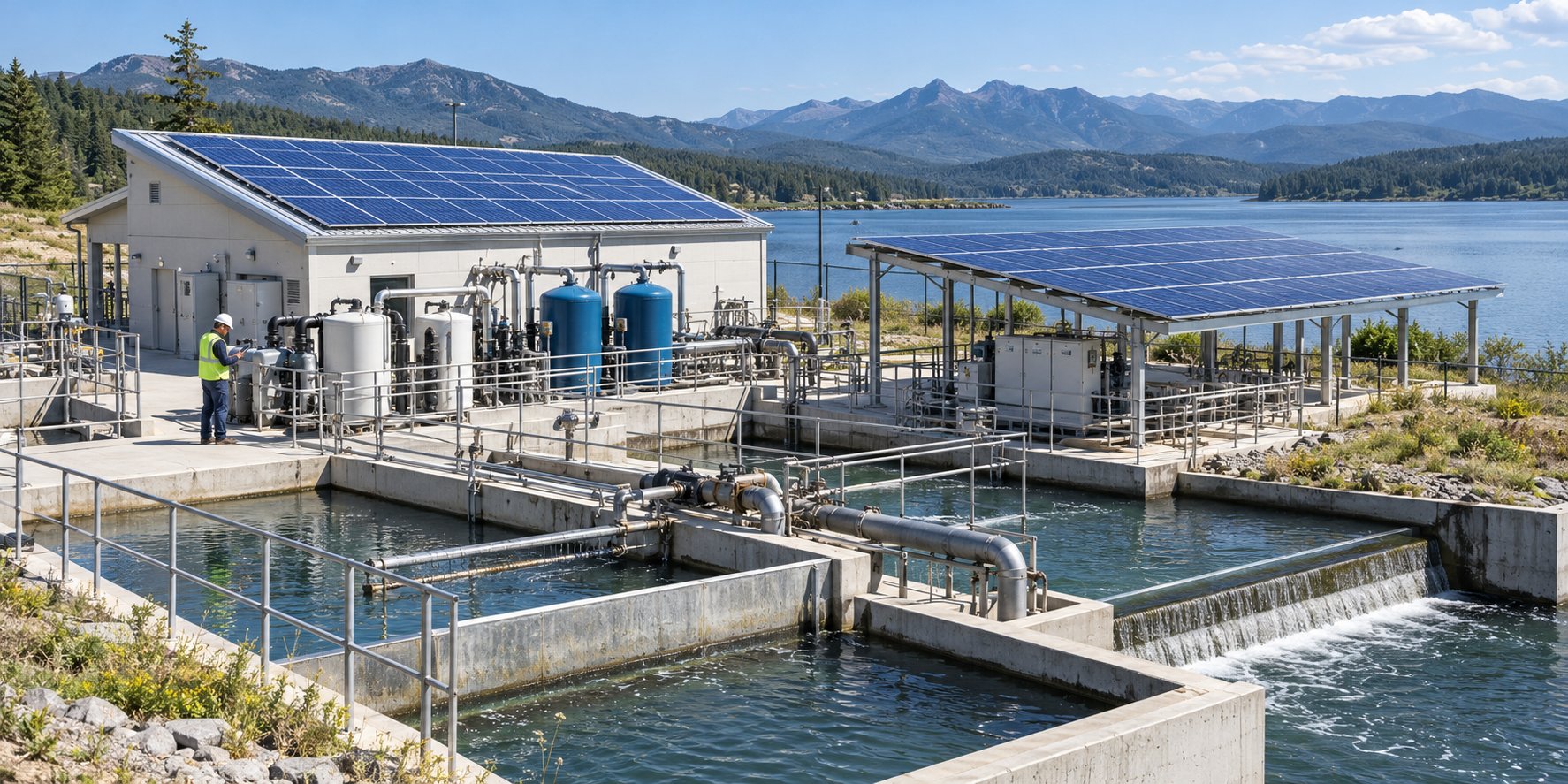
Green ETFs matter in 2026 because spending on clean power and power grids is rising, and one fund gives access to that trend across dozens of companies. The International Energy Agency (IEA) expects global electricity demand to grow by more than 3.5% a year through 2030. The IEA says annual investment in power grids needs to rise by 50% by 2030 to meet that demand. It also expects renewables and nuclear to supply half of the world's electricity by 2030, up from 42%. Four of the ten funds on this list own clean energy and grid companies.
Green ETFs spread company risk across a whole theme. A single clean energy company can fall sharply on one lost contract, a subsidy change or a trade ruling. A fund such as First Trust NASDAQ Clean Edge Smart Grid Infrastructure Index Fund (GRID) owns 123 companies, so no single one decides the result. That makes green ETFs a simpler entry point than picking individual green stocks.
A fund's name doesn't show how much impact it has. The Impact Score of each ETF makes funds with the same theme comparable. First Trust Global Wind Energy ETF (FAN) and iShares Global Clean Energy ETF (ICLN) are both clean energy funds, but FAN scores 80 and ICLN scores 62.
Green ETFs and ESG ETFs are different kinds of fund. ESG ETFs screen the broad market by ESG rating, which measures risk to the company. Green ETFs own companies whose products address an environmental problem.
This list ranks 10 US-listed green ETFs by Impact Score. Ziggma chose funds that own companies working on clean energy, the power grid, water, timber and waste. The ten funds were selected on three criteria: their Impact Scores, whether their holdings match their green label, and what they cost.
The Impact Score comes from ACA Ethos, Ziggma's impact data provider. It rates real-world impact from 0 to 100 across four sub-scores: Climate Action, Resource Use, Fair Labor and Accountability. Scores fall into five bands: Harmful, Negative, Mixed, Positive and Profound. An ESG rating is different, because it measures risk to the company rather than the company's effect on the world.
Each fund on this list has its own Impact Score, shown on its fund page in Ziggma. The guide to how Ziggma's impact data works explains where the underlying data comes from. The Ziggma Stock Score doesn't appear on this page because it rates individual companies, not funds.
When two funds share an Impact Score, the one with the lower expense ratio ranks first. EVX and FAN both score 80, and EVX ranks first on its 0.55% net expense ratio against 0.60% for FAN. Fund data comes from issuer websites in October 2026. Impact Scores were checked on 23 October 2026 and change as new data arrives.
Four of the ten funds are green energy ETFs, also called clean energy ETFs. Green ETF is the broader term, and it also covers funds that own water, timber and waste companies.
First Trust Global Wind Energy ETF (FAN) has the highest Impact Score of the four clean energy funds, at 80. Invesco Solar ETF (TAN) follows at 73. The smart grid fund, First Trust NASDAQ Clean Edge Smart Grid Infrastructure Index Fund (GRID), scores 69. iShares Global Clean Energy ETF (ICLN) scores 62. Ziggma's list of the best renewable energy stocks ranks individual companies from the same industry.
VanEck Environmental Services ETF (EVX) owns waste management and environmental services companies, and it ties FAN for the top score of 80. Three funds own water companies: Global X Clean Water ETF (AQWA) at 78, Invesco Water Resources ETF (PHO) at 71 and First Trust Water ETF (FIW) at 65. Two funds own timber and forestry companies: Invesco MSCI Global Timber ETF (CUT) at 74 and iShares Global Timber & Forestry ETF (WOOD) at 67. Ziggma's list of the best water stocks ranks individual water companies, including Xylem, one of the largest positions in AQWA.
VanEck Environmental Services ETF owns waste management and environmental services companies. It tracks the MarketVector Global Environmental Services Index, which replaced the NYSE Arca Environmental Services Index in December 2025. Its largest positions in October 2026 were Waste Management, Ecolab and Republic Services. EVX owns 28 companies, so a few holdings carry a large share of the fund. VanEck caps the expense ratio at 0.55% until February 2027.
First Trust Global Wind Energy ETF owns companies in the wind power industry. It tracks the ISE Clean Edge Global Wind Energy Index and launched in 2008. Its three largest positions in October 2026 were Nordex, Orsted and Vestas Wind Systems, all based in Europe. Exchange rates therefore affect FAN's returns for US investors. FAN ties EVX on the Impact Score and ranks second on its higher expense ratio.
Global X Clean Water ETF owns companies that supply, treat and manage water. It tracks the Solactive Global Clean Water Industry Index and launched in 2021, which makes it the youngest fund on this list. Its largest positions in October 2026 were American Water Works, Ferguson Enterprises and Xylem. AQWA had about $21 million in net assets in October 2026, the smallest of the ten. Small ETFs carry a higher risk of being closed by their issuer.
Invesco MSCI Global Timber ETF owns timber and forest products companies around the world. It tracks the MSCI ACWI IMI Timber Select Capped Index and launched in 2007. Its largest positions in October 2026 were Svenska Cellulosa, UPM-Kymmene and Avery Dennison. CUT rates lower on Climate Action than on its other three Impact Score sub-scores. Its 0.76% net expense ratio is the highest on this list, and it had about $29 million in assets in October 2026.
Invesco Solar ETF owns companies in the solar energy industry. It tracks the MAC Global Solar Energy Index and launched in 2008. Its largest positions in October 2026 were Nextpower, First Solar and Enlight Renewable Energy. TAN rates lower on Fair Labor than on its other three Impact Score sub-scores. Ziggma's list of the best solar stocks ranks individual solar companies by Ziggma Stock Score.
Invesco Water Resources ETF owns US-listed companies that make products to conserve and purify water. It tracks the Nasdaq OMX US Water Index and launched in 2005, which makes it the oldest fund on this list. Its largest positions in October 2026 were Ecolab, Ferguson Enterprises and Waters Corporation. PHO rates lower on Resource Use and Fair Labor than on Climate Action and Accountability. It had about $2.01 billion in assets in October 2026.
First Trust NASDAQ Clean Edge Smart Grid Infrastructure Index Fund owns companies in electrical grid and energy infrastructure. It tracks the Nasdaq Clean Edge Smart Grid Infrastructure Index and launched in 2009. Its largest positions in October 2026 were Johnson Controls, Eaton and Quanta Services. GRID had about $11.1 billion in net assets and 123 holdings in October 2026. That makes it the largest and broadest fund on this list.
iShares Global Timber & Forestry ETF owns companies that own or manage forests or produce timber, pulp and paper. It tracks the S&P Global Timber & Forestry Index and launched in 2008. Its largest positions at the end of September 2026 were Suzano, Weyerhaeuser and Nine Dragons Paper. WOOD owns 24 companies, the fewest of any fund on this list. Its 0.39% expense ratio is the second-lowest here.
First Trust Water ETF owns companies across the water industry. It tracks the ISE Clean Edge Water Index and launched in 2007. Its largest positions in October 2026 were Agilent Technologies, Waters Corporation and Veralto, which make testing and analysis instruments. FIW had about $1.77 billion in net assets in October 2026.
iShares Global Clean Energy ETF owns clean energy companies around the world. It tracks the S&P Global Clean Energy Transition Index and launched in 2008. Its largest positions at the end of September 2026 were Bloom Energy, China Yangtze Power and First Solar. ICLN has the lowest expense ratio on this list. Its Impact Score of 62 is the lowest of the ten but still sits in the Positive band.
Green ETFs own baskets of companies working on clean energy, the power grid, water, timber and waste. Each one is a sector fund, so it's narrower than a broad market index fund. All ten funds on this list score in the Positive or Profound band of the Impact Score. Index rules change, so the holdings behind a ticker are worth checking again before any decision. Investors who prefer individual companies can start with Ziggma's list of the best green stocks or compare companies in the Ziggma free stock screener. Ziggma's guide to building a fossil-free portfolio covers how to keep fossil fuel companies out of a whole portfolio. This article is for information only and is not investment advice.