Ziggma’s GoodStocks research hunts for a crucial overlap: businesses where the push for shareholder returns and the push to do real good in the world pull in the same direction. A growing body of evidence suggests these companies tend to outperform over time.
MSA (MSA 🔎) designs mission critical safety equipment for firefighters, industrial workers, and emergency responders. It combines steady earnings growth, strong profitability, and a growing dividend with measurable impact. Carbon intensity is down 28%. Gender equality scores are high. And most importantly, its products literally save lives.
MSA Safety sits right in that overlap. It builds the breathing apparatus, gas detectors, and helmets that keep firefighters and industrial workers alive, and it has quietly turned that mission into steady profits, widening margins, and a rising dividend. Analysts see the shares climbing roughly 20% to a target near $204, and MSA earns a Ziggma Score of 92 out of 100, among the very best in its sector.
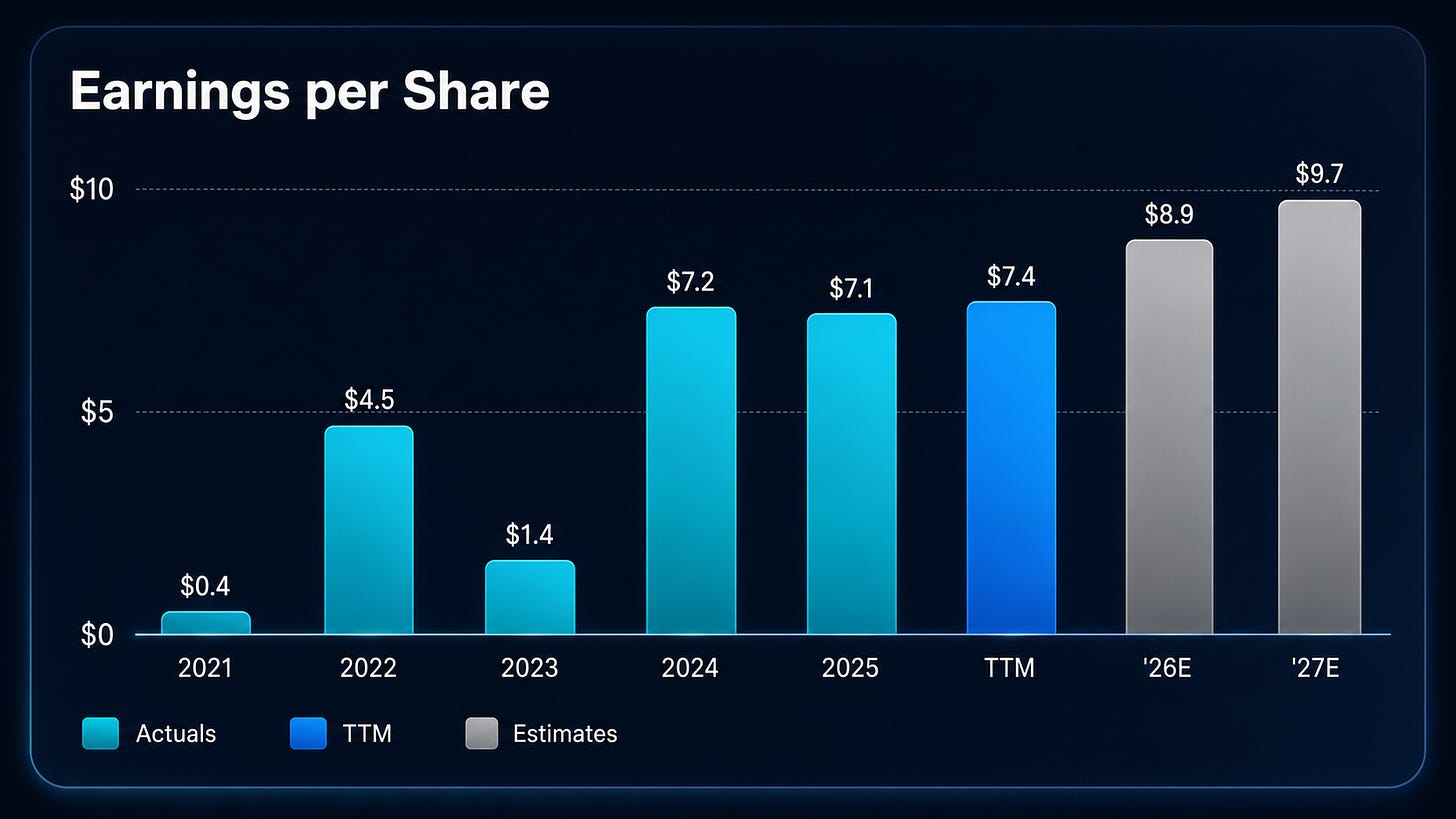
MSA is forecast to grow profit about 25% in 2026 while trading at just over 19 times next year’s expected earnings, a modest price for that pace of growth. With a Ziggma Score of 92 and analysts pointing to roughly 19% upside toward $204, the odds favor patient shareholders.
MSA’s core product does something few businesses can claim: it keeps people alive in the most dangerous moments of their working lives. Every breathing apparatus, gas detector, and fire helmet exists to bring someone home safely, and the company backs that mission with a strong gender equality score of 84 and a spotless compliance record.

Source: Ziggma
Picture the worst day at an industrial site. A gas leak nobody can see, or a fire working its way up a stairwell. The gear standing between a worker and a very bad outcome was probably built by MSA Safety.
The company has done this since 1914, from its base near Pittsburgh, and today it runs about $1.9 billion in annual sales with a workforce north of 5,000. Three product lines carry the business. First, fire service, home to the G1 breathing apparatus, GALLET and Cairns helmets, and Bristol protective clothing. Second, detection, the fixed and portable instruments that sniff out toxic or explosive gas before it becomes a headline. Third, industrial protective equipment, the hard hats and fall-protection harnesses worn on construction sites and utility towers.
Here is the part investors tend to underrate. Most of this demand is not a choice. A fire department cannot decide to skip certified breathing gear this year, and a refinery cannot run its gas detectors past the point of failure and simply hope. Standards like NFPA 1970 spell out what has to be worn and when it has to be swapped out. That turns a meaningful slice of MSA’s revenue into something closer to a subscription than a one-off sale.
Switching costs in this business are quietly brutal, and they work in MSA’s favor. Once a department trains its crews on the G1 platform, buys the cylinders, stocks the spare parts, and wires the equipment data into its command software, ripping all of that out to save a few dollars per unit is a non-starter. Reliability is the whole product. Nobody wants to be the chief who bought the cheaper mask.
Then there is the recurring revenue underneath the hardware: replacement cylinders, filters, washable liners, software, and connected-device subscriptions through systems like FireGrid. MSA keeps billing its customers long after the first sale closes. The broader safety-equipment market grows at a steady mid-to-high single-digit clip, helped along by stricter workplace rules and infrastructure spending, but the more important story is stickiness, not the market’s headline growth rate.
Revenue has grown around 6% a year over the past five years and landed near $1.9 billion in 2025. Fine, not thrilling. But look one line down and the picture sharpens fast. Net profit margin has gone from low single digits a few years ago to roughly 15% today. Return on equity sits near 23%. Operating profit margin has pushed up toward 25%. In plain English, MSA keeps far more of every dollar it sells than it used to, and that is where the earnings growth is actually coming from.
At just over 19 times next year’s expected earnings, MSA is priced like a sleepy industrial rather than a growth story, even with profit set to jump about 25% in 2026. Put that next to the multiples stapled onto anything with “AI” in the pitch deck and it looks almost forgotten. The balance sheet backs up the calm. Debt is low, net borrowings run under a single year of earnings, and interest costs are covered better than twelve times over. There is no fragility hiding here.
Source: Ziggma
The growth angle is less about selling more masks and more about selling smarter ones. MSA’s newer equipment streams live data, air pressure, movement, and alarms, straight to the incident commander’s screen, and its washable, swappable components pull crews back for parts and service again and again. The G1 XR breathing apparatus, the ALTAIR io 6 gas detector, and the FireGrid command system all push the same direction: deeper into a customer’s operations, and toward higher-margin recurring revenue. Regulation and infrastructure money handle the rest.
Analysts peg fair value near $204, roughly 19% above where the stock trades today. The Ziggma Score of 92 out of 100 tells the same story from a different angle, propped up by an 89 on profitability, a 76 on valuation, a 71 on financial health, and a 70 on growth. Worth noting: the platform cannot find an obvious weakness in the business, which is rarer than it sounds.
No thesis is bulletproof, so here is the other side. A recession would cool industrial orders, and municipal budgets can push firefighter purchases a year to the right. Pricing competition and supply-chain snags could nibble at margins, and with a big share of sales earned overseas, a strong dollar quietly shaves the reported numbers. That 19% upside is an analyst target, not a guarantee, and the growth score of 70 is a reminder that the pace here is steady, not explosive.
A durable, cash-generating business, growing profit 25%, trading at 19 times earnings, with the Street pointing 19% higher. That is a lot of upside for not much of a gamble.
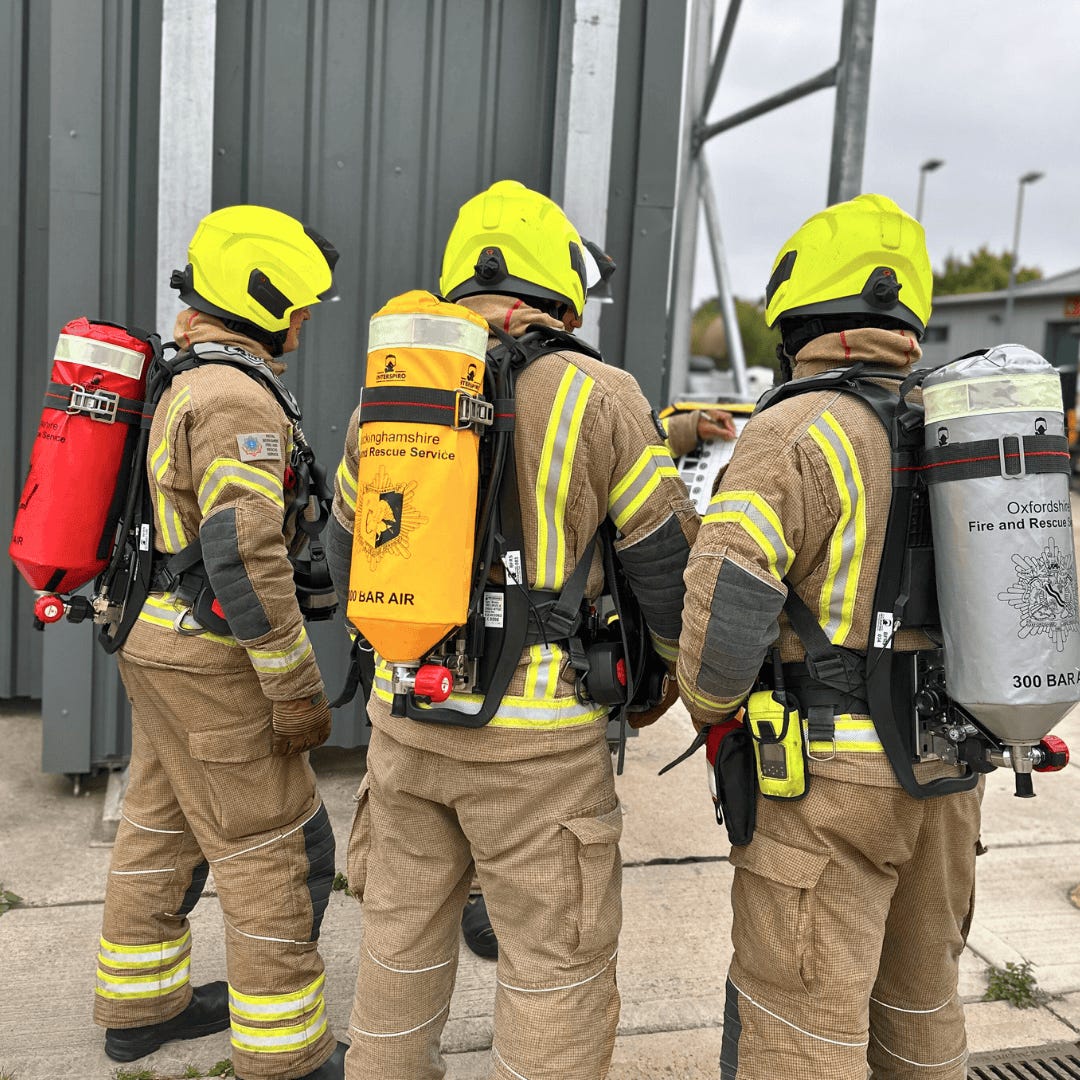
This is the rare company whose product is the impact. MSA’s breathing apparatus lets firefighters operate inside smoke and flame, its gas detectors warn workers before an invisible leak turns deadly, and its helmets and harnesses prevent life-altering injuries. Newer designs even help firefighters cut cancer-causing contamination through washable, replaceable gear, a direct health benefit for the people who protect the rest of us. There is no need to stretch for a sustainability story here. The impact is the whole point of the product.
On the social side, MSA stands out. It earns a gender equality score of 84, high for a heavy-industry manufacturer, and holds a clean governance record with $0 in fines and violations, a perfect accountability mark. Its overall Impact Score of 64 is rated positive. To be straight with you, the climate picture is more mixed: renewable energy makes up only 15% of use and recycling sits near 35%, both areas where MSA trails. We rather name that plainly than dress it up. The most defensible impact case rests on the lives its products protect and the way it treats its people.
MSA Safety will never trend on social media, and that is exactly the appeal. It sells products the world cannot do without, grows profit at a healthy clip, trades at a sensible price, and carries analyst-expected upside near 19%. Add a genuine, measurable purpose, keeping firefighters and workers alive, plus a workforce record that outshines its peers, and you have a textbook GoodStock. For investors who want returns and real-world impact to reinforce each other rather than compete, MSA earns its spot on our GoodStocks list.
____________________________________________________________________________________________________________________________________________________
Disclaimer
This information is provided solely for general information and educational use. It is not intended as, and should not be construed to be, financial, investment, tax, legal, or other professional advice. Data used in the analysis is derived from third-party sources and applicable at the time of publication of the analysis. No representation or warranty is made as to the accuracy or completeness of the information or any analysis herein.
Ziggma is not registered or licensed as a financial advisor, broker-dealer, or tax professional. Readers should perform their own independent research and seek advice from appropriately qualified professionals before making any financial, investment, or legal decisions.
You should presume that, as of the date this report is published or any related communication referencing publicly traded securities or assets, Ziggma team members may hold positions in the securities or assets discussed and could benefit financially from price movements. Positions may be changed without notice.
There is no duty to revise or update the content after publication. Neither Ziggma nor any affiliated parties accept responsibility for market changes, economic developments, or subsequent events that could affect the relevance or accuracy of the information.
Forward-Looking Statements
This report may include forward-looking statements, such as forecasts, projections, estimates, or expectations regarding financial outcomes, market dynamics, or future corporate developments. These statements are based on assumptions that may not hold true, and actual results may vary materially. The author undertakes no obligation to update or revise any forward-looking statements as circumstances change.
Third-Party Data & External Sources
Certain information is sourced from third parties. Nonetheless, the accuracy, completeness, and timeliness of such information cannot be assured. Ziggma disclaims any responsibility for errors or omissions in third-party data and does not endorse, verify, or assume accountability for the methodologies or conclusions of external sources.
AI-Generated Enhancements
AI tools can be used to enhance clarity, structure, and brevity, and to assist with research organization, ideation, and analytical review.
Redistribution
You may share this report for informational purposes. However, reproduction, distribution, republication, or modification of any portion of the content, in whole or in part, without prior written consent is prohibited.
Investment Risk Disclosure
All investing carries risk of loss.. Historical performance does not guarantee future outcomes. References to specific securities, companies, or strategies are for informational purposes only and do not constitute recommendations or endorsements. Any use of, or reliance on, the information in this report is entirely at the reader’s own risk.
Neither Ziggma nor affiliated parties shall be liable for any direct or indirect losses or damages of any kind arising from the use of this report or reliance on its contents. By accessing this report, you agree to indemnify and hold harmless Ziggma and affiliated parties from any claims, liabilities, or damages resulting from your use of the material.
You alone bear responsibility for your decisions. Use this information at your own discretion and risk.