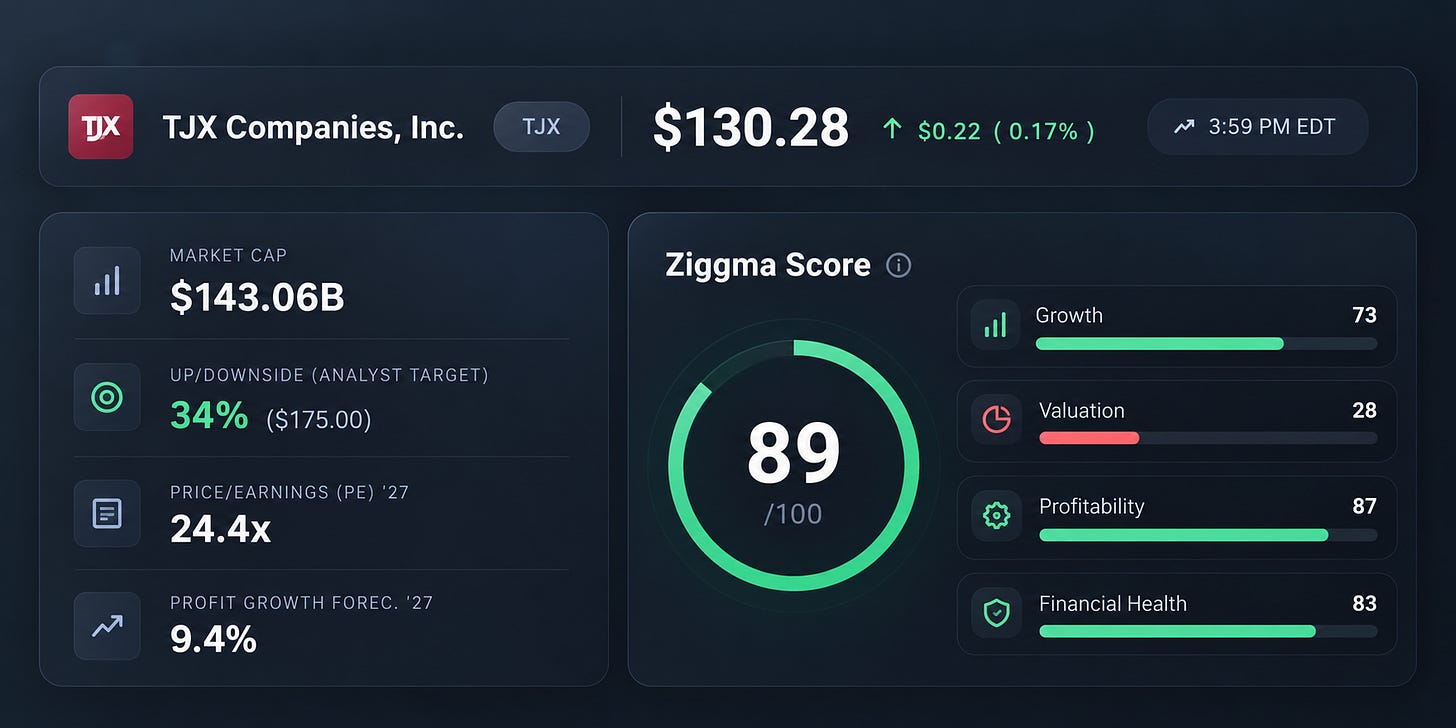
When we first wrote about TJX Companies (🔎 TJX) in April, investors paid about 31x projected earnings for the owner of T.J. Maxx, Marshalls and HomeGoods. Today they pay about 24x. The business didn’t get worse. The stock got cheaper.
Shares closed at $130.25 on September 28, roughly 23% below their June high of $170. The slide started with an August earnings beat that came with one weak division. Analysts now see 35% upside. The case for TJX just got stronger. Our own math suggests about 20% upside.
GoodStocks is Ziggma’s research series on companies where shareholder returns and real-world impact line up, a pairing a growing body of evidence links to outperformance. TJX still qualifies. Its model runs on buying brand-name goods other companies couldn’t sell and getting them into shoppers’ closets, and it has cut emissions from its own operations by 37% since 2017.
TJX is a holding of the Growth, Impact, Momentum model portfolio.
Source: Ziggma
Underlying earnings per share rose 11% last quarter, while the price investors pay for each dollar of those earnings has fallen about 20% since April. A retailer earning a 62% return on shareholder equity rarely goes on sale like this.
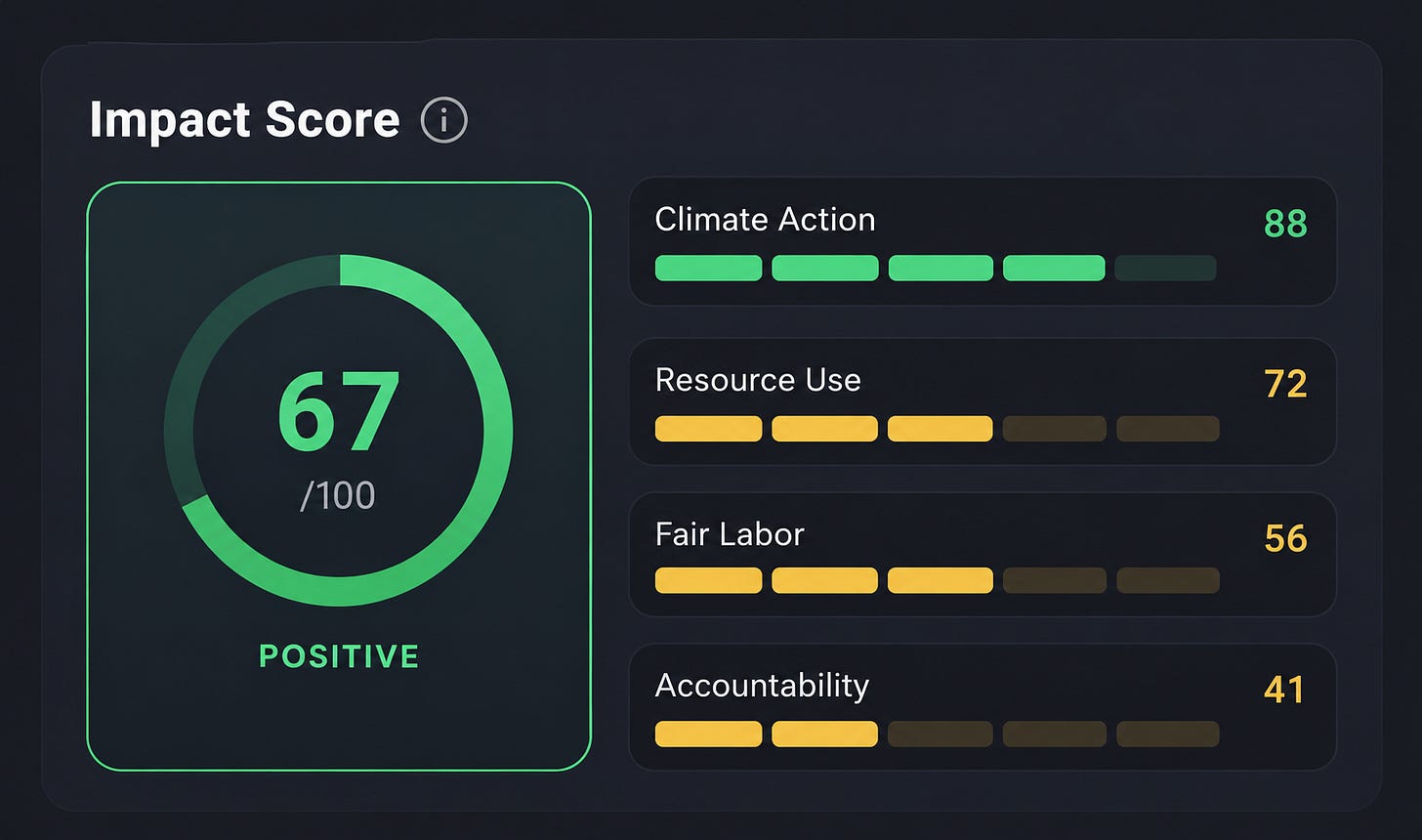
TJX sells brand-name clothing and home goods at 20% to 60% below regular prices, much of it bought from brands stuck with too much stock. Its Climate Action score of 71 is its best impact result, backed by a 9.7% drop in carbon intensity.
Source: Ziggma
TJX is the world’s largest off-price retailer, with 5,285 stores in ten countries. TJX’s buyers don’t order months ahead. They wait, then pick up overruns, canceled orders and end-of-season stock from thousands of vendors. Brands get cash for goods they couldn’t move, and shoppers get a mix that changes every week.
Scale is the moat. Brands would rather sell quietly to one huge, reliable buyer than dump goods in ways that hurt their image, and no rival buys at TJX’s volume. Management just raised its long-term store target to 7,500, about 42% more than today.
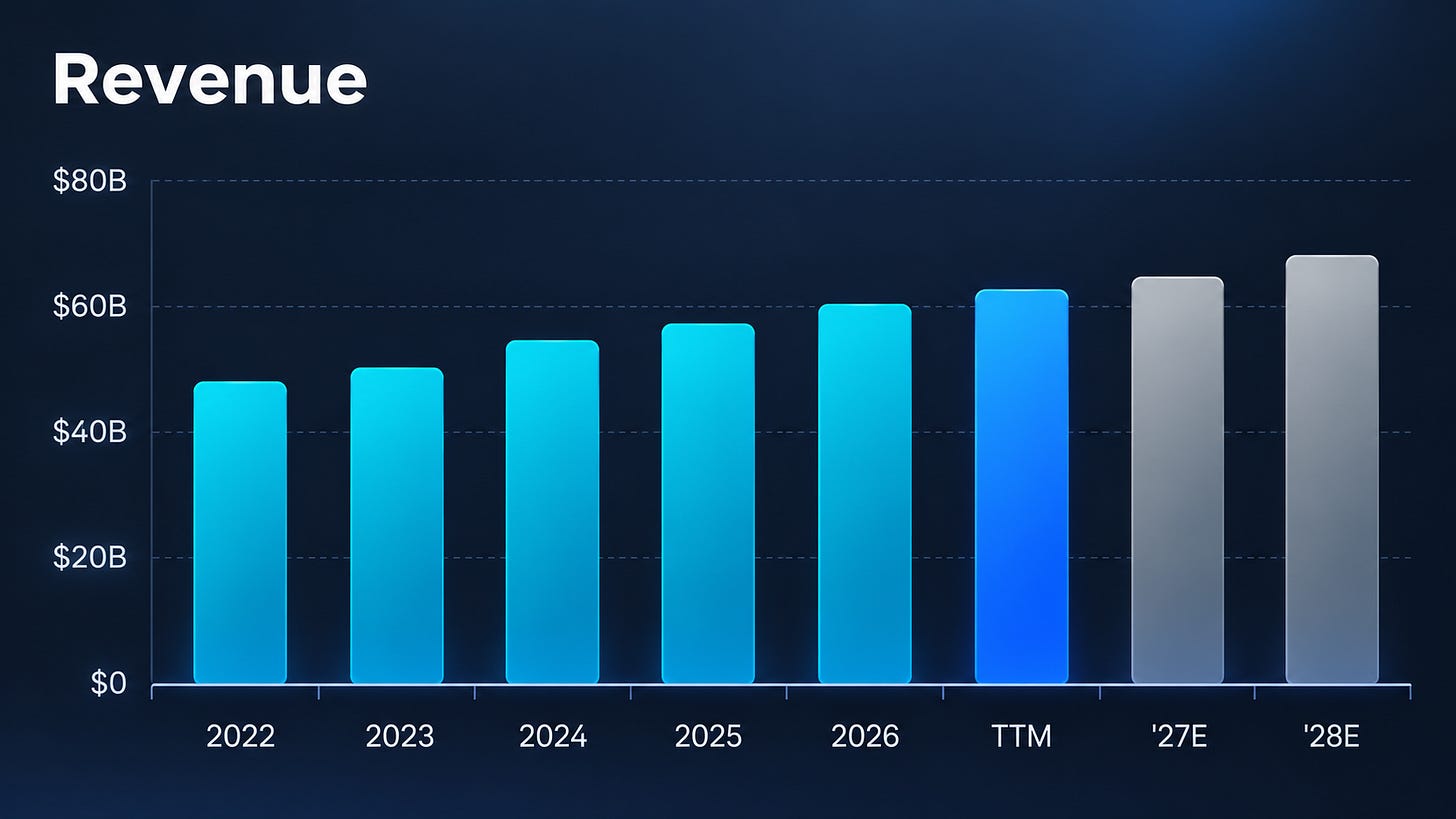
Sales rose 5% to $15.2 billion in the quarter ended August 1, and sales at stores open at least a year grew 4%. Reported earnings per share jumped 24% to $1.36, but $0.14 of that came from refunds of tariffs TJX had paid earlier. Strip those out and earnings rose 11% to $1.22, still above the $1.19 analysts expected.
The soft spot was Marmaxx, the T.J. Maxx and Marshalls division that brings in 60% of sales. Its same-store sales grew just 1%, down from 6% in the first quarter. Guidance of 2% to 3% same-store growth for the current quarter did the rest. Investors paid less attention to the raised full-year outlook of $5.15–5.20 in underlying earnings per share.
Source: Ziggma
CEO Ernie Herrman didn’t blame shoppers. On the August 19 call he said Marmaxx didn’t have the right merchandise mix in a handful of areas, calling it “entirely self-inflicted and within our control.” Slightly fewer customers bought, and he tied that to goods missing from the shelves, not to prices shoppers balked at. He said trends improved in August and that he’s “most confident” the fix will show by the fourth quarter.
The rest of TJX backs him up. In the same quarter, HomeGoods and the international business grew 7% and Canada 6%, mostly on more customer visits. If shoppers were tiring of off-price stores, those divisions would have felt it too. And buyers who purchase close to the season can fix a mix problem quickly.
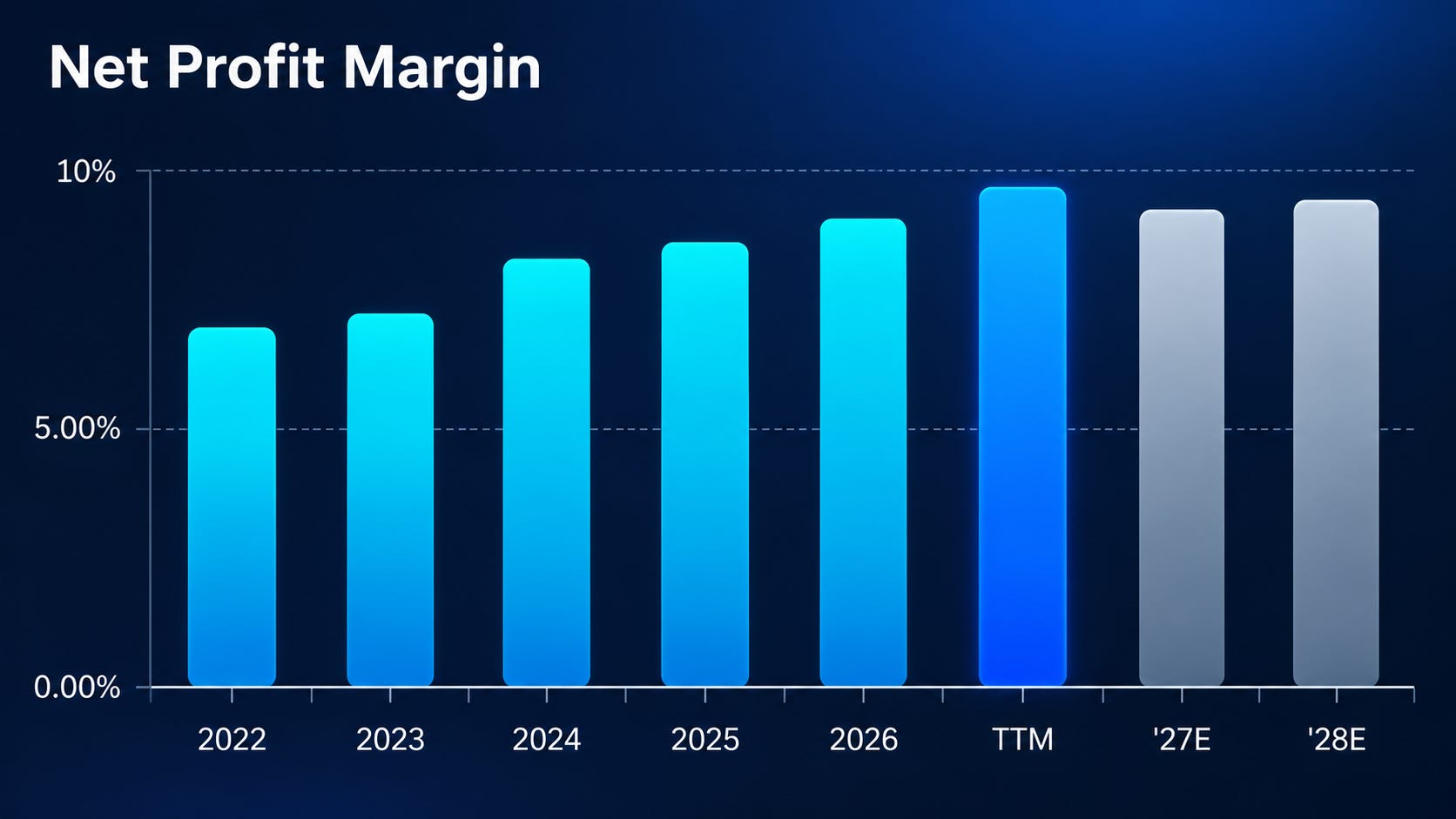
Net profit margin reached 9.7% over the past 12 months and has risen every year since fiscal 2022, when it was 6.8%. The balance sheet is solid, with $6.0 billion in cash and debt at just 0.3x shareholder equity. TJX expects to buy back $2.75–3.0 billion of stock this year.
Source: Ziggma
At 24.4x expected earnings for this fiscal year, TJX trades below its five-year average of 27.2x and well below the 30.7x we flagged in April. Ross Stores trades near 25.6x and Burlington near 17.8x, according to Zacks, which puts TJX in the middle of its peer group. Compare off-price retailers side by side in Ziggma's free stock screener.
If Marmaxx is still weak after the holidays, the self-inflicted explanation gets harder to believe. Tariff refunds are a one-time boost, and TJX says future refunds are uncertain. With the 10-year Treasury yield above 5%, a pullback in consumer spending would hit every retailer.
The $175 analyst target assumes the market goes back to paying about 30x earnings. We’d rather not count on that. If underlying earnings grow 10% next year from the midpoint of this year’s guidance, to about $5.70, and the stock gets its five-year average multiple, it would be worth about $155. That’s 19% above today’s price, plus a 1.4% dividend yield.
Every season, brands make more than they sell. TJX buys a large share of that surplus and puts it on shelves where it gets worn and used. To be precise, this doesn’t reduce how much the fashion industry produces. It makes sure more of what’s already made finds a buyer instead of being destroyed or dumped.
The company says it has cut absolute emissions from its own operations by 37% since fiscal 2017, even as it added stores, and sources 40% of its energy from renewables. Its targets are 100% renewable electricity by 2030 and net-zero operations by 2040. Its 81% waste recycling rate slightly trails its own 85% goal for 2027.
TJX’s Fair Labor score is 50, and one number drags it down. The CEO earns 1,565x what the median worker makes, which results in a score of 0. While TJX defends its 1,565:1 CEO-to-median-worker pay ratio as a byproduct of employing part-time retail staff, this astronomical gap illustrates how executive compensation has decoupled from the reality of frontline labor. It’s not an isolated case. Rather, it’s mirrored by peers like Ross Stores (~1,700:1) and clearly something shareholders must address as ultimate owners of the company.
Meanwhile, gender equality scores 90, a real strength.
Accountability is TJX’s other weak impact area scoring 43. Privacy scores 76, but fines and violations score 0, and the public record gives that zero some context. In 2022 TJX paid a $13 million federal penalty for selling about 1,200 recalled products between 2014 and 2019, mostly infant sleepers pulled over suffocation risk. That same year, OSHA proposed $239,290 in fines over blocked exits and unstable stacks of boxes at a Georgia T.J. Maxx, after citing similar hazards at stores in Illinois and Florida.
Those sums are tiny for a company this size, but the recall case points to a risk built into the model: a retailer that buys other companies’ leftovers has to catch the ones that were pulled for a reason. There are signs TJX has gotten better at it. The settlement put it under five years of sworn compliance reports to regulators, including permanent register blocks on recalled items, and we found no new penalty for selling recalled goods since. In 2023 TJX filed its own recall of baby blankets with the regulator. We also found no OSHA citation announced after 2022. That’s encouraging, not proof, and a score of 0 today says TJX hasn’t earned the benefit of the doubt yet.
In April we said pullbacks were the time to build a position in TJX. This is one. The profit outlook just went up while the price per dollar of earnings fell about 20%. For investors who want returns and impact from the same stock, the entry point is better than it was in spring. The pay gap and the repeat safety fines are fair criticisms, and we’ll keep watching both.
______________________________________________________________________________________________________________________________
Disclaimer
This information is provided solely for general information and educational use. It is not intended as, and should not be construed to be, financial, investment, tax, legal, or other professional advice. Data used in the analysis is derived from third-party sources and applicable at the time of publication of the analysis. No representation or warranty is made as to the accuracy or completeness of the information or any analysis herein.
Ziggma is not registered or licensed as a financial advisor, broker-dealer, or tax professional. Readers should perform their own independent research and seek advice from appropriately qualified professionals before making any financial, investment, or legal decisions.
You should presume that, as of the date this report is published or any related communication referencing publicly traded securities or assets, Ziggma team members may hold positions in the securities or assets discussed and could benefit financially from price movements. Positions may be changed without notice.
There is no duty to revise or update the content after publication. Neither Ziggma nor any affiliated parties accept responsibility for market changes, economic developments, or subsequent events that could affect the relevance or accuracy of the information.
Forward-Looking Statements
This report may include forward-looking statements, such as forecasts, projections, estimates, or expectations regarding financial outcomes, market dynamics, or future corporate developments. These statements are based on assumptions that may not hold true, and actual results may vary materially. The author undertakes no obligation to update or revise any forward-looking statements as circumstances change.
Third-Party Data & External Sources
Certain information is sourced from third parties. Nonetheless, the accuracy, completeness, and timeliness of such information cannot be assured. Ziggma disclaims any responsibility for errors or omissions in third-party data and does not endorse, verify, or assume accountability for the methodologies or conclusions of external sources.
AI-Generated Enhancements
AI tools can be used to enhance clarity, structure, and brevity, and to assist with research organization, ideation, and analytical review.
Redistribution
You may share this report for informational purposes. However, reproduction, distribution, republication, or modification of any portion of the content, in whole or in part, without prior written consent is prohibited.
Investment Risk Disclosure
All investing carries risk of loss. Historical performance does not guarantee future outcomes. References to specific securities, companies, or strategies are for informational purposes only and do not constitute recommendations or endorsements. Any use of, or reliance on, the information in this report is entirely at the reader’s own risk.
Neither Ziggma nor affiliated parties shall be liable for any direct or indirect losses or damages of any kind arising from the use of this report or reliance on its contents. By accessing this report, you agree to indemnify and hold harmless Ziggma and affiliated parties from any claims, liabilities, or damages resulting from your use of the material.
You alone bear responsibility for your decisions. Use this information at your own discretion and risk.